VDA 19.1 vs ISO 16232: What Is the Difference?
The short answer
VDA 19.1 vs ISO 16232: for the test itself, almost nothing differs. Both are technical cleanliness inspection documents for particulate contamination on functionally relevant components. ISO wrote ISO 16232:2018 to align with VDA 19.1 (2015). For everything those two editions both contain, a procedure qualified to one meets the other. That covers the extraction methods, the declining test and blank value rules, the size classes and the Component Cleanliness Code. Content added in VDA 19.1 (2026) is not in ISO 16232:2018, so a specification that relies on it has to be covered explicitly. What differs is who publishes each document and how recently it was revised. The one that applies to your parts is the one your drawing or customer specification names, at the revision it names.
Where the two documents came from
VDA 19 came first. The German automotive association (VDA) published it in 2004, with Fraunhofer IPA, as the first comprehensive guideline for inspecting particulate contamination on functionally relevant automotive components. ISO followed in 2007 with ISO 16232, a ten-part series (ISO 16232-1 through ISO 16232-10).
VDA 19.2, a planning guideline for clean assembly areas, arrived in 2010. In March 2015 VDA revised the inspection guideline and renamed it VDA 19.1. ISO then consolidated its ten parts into ISO 16232:2018, a single document that replaces the 2007 series and adopts the VDA 19.1 size classes and coding.
VDA issued the third edition of VDA 19.1 as a Yellow Volume, its draft for industry comment, in July 2025, with the final edition following in 2026; the changes described below are taken from the Yellow Volume, so check the published edition your customer cites. ISO 16232:2018 is under revision; ISO/DIS 16232, the draft that will replace it, is at the enquiry stage.
How each document is organized
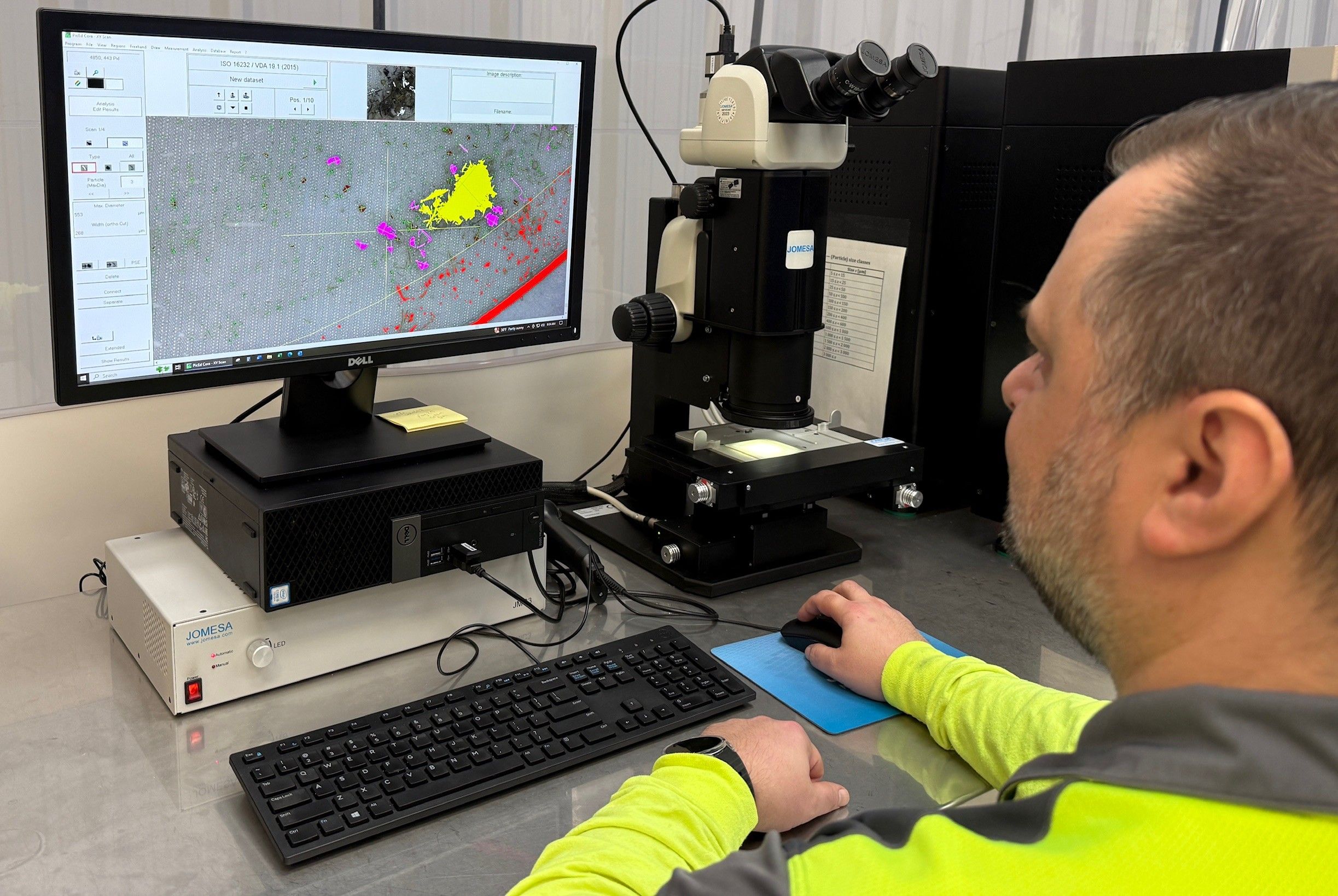
ISO 16232:2018 runs from inspection principles (clause 5) through qualification tests and blank level (6), extraction (7), analysis filtration (8) and analysis methods (9) to documentation (10). Clause 9 separates standard analysis (gravimetry, light-optical counting) from extended analysis and shortened analysis. Extended analysis covers SEM-EDS particle analysis (the standards write it SEM/EDX), LIBS, Raman, IR spectroscopy and X-ray microtomography. The third edition of VDA 19.1 covers the same ground, going by its 2025 Yellow Volume table of contents. It adds chapters ISO 16232:2018 does not have as chapters: cleanliness specification and inspection strategy, interpretation and reaction, work safety, and case examples. ISO 16232:2018 puts its guidance on deriving limit values in Annex H instead. The skeleton is identical: qualify the procedure, extract, filter, analyze, document.
Extraction and analysis: where they are the same
- Scope. Particulate contamination on functionally relevant components. Neither covers filmic contamination, wipe tests or operating fluids, and neither sets limit values.
- Extraction. Pressure rinsing, ultrasonic vibration, internal rinsing, agitation, dissolving and air extraction.
- Qualification. The six-step declining test with a 10 percent criterion. The optional double inspection at 30 percent. A blank value held at or under 10 percent of the required cleanliness value and never subtracted from the result.
- Sizing. Length is the maximum Feret diameter. A fiber is a particle whose stretched length is more than 20 times its width, with a width of 50 microns or less. VDA 19.1 adds that a fiber is not metallic-shiny.
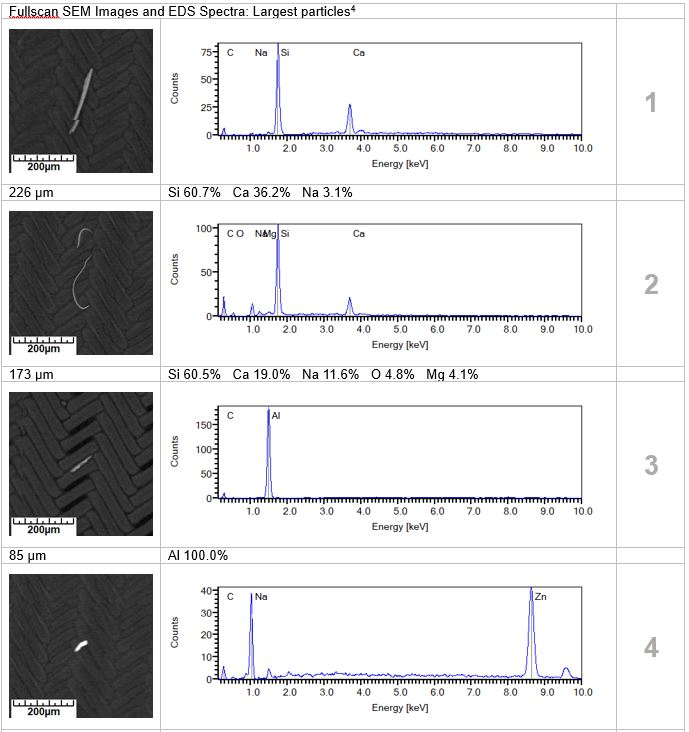
- Analysis and reporting. Gravimetry and light-optical counting are the standard analysis in both. SEM-EDS is an extended analysis in ISO 16232:2018 and VDA 19.1 (2015); VDA 19.1 (2026) adds an SEM-EDS standard analysis (see below). Both documents call for the same report content, normally including an image of the largest particle in each category.
Where they differ
The difference between VDA 19.1 and ISO 16232 comes down to three things.
- Status. VDA 19.1 is a non-binding recommendation of an industry association; ISO 16232 is an International Standard. That affects how a scope of accreditation or a report is worded, not what happens at the bench.
- Revision timing. VDA 19.1 (2026) adds extraction and analysis content that ISO 16232:2018 does not contain, including low-pressure rinsing, two more dry extraction methods and an SEM-EDS standard analysis. The FAQ below lists the changes.
- VDA 19.2. The assembly-environment guideline is not a test method and has no ISO counterpart.
The Component Cleanliness Code is the same in both
Both use the same size classes, B (5 to 15 microns) through N (3,000 microns and above), and the same contamination levels, each doubling the “up to” count. Both use the same prefixes: A for particles per 1,000 cm² of wetted surface, V per 100 cm³ of wetted volume, N per component as raw counts. Coding is optional in both documents. A worked decoding of a print note is in how to read a Component Cleanliness Code.
One trap: the withdrawn ISO 16232-10:2007 stopped at class K (1,000 microns and above), with no L, M or N. Company specifications written against it still use that table, so confirm the revision before comparing codes.
Which one applies to your parts
The document the drawing or customer specification cites, at the revision it cites. Many OEMs also maintain company cleanliness standards built on these documents. The company standard sets the limits and can add its own method and classification rules, for example what counts as a hard particle. The ISO or VDA document supplies the base method.
Before requesting a test, confirm the document and revision; everything else the laboratory needs is listed on the ISO 16232 and VDA 19.1 cleanliness testing page. The report should follow the notation of the document cited. If a specification cites both, confirm which edition of each, run one qualified procedure that covers what both editions require, and agree the report layout with the customer up front. Neither document certifies a part or a lab, so results are “tested to” or “inspected in accordance with” the standard, never “certified to” it.
Getting a part tested to either document
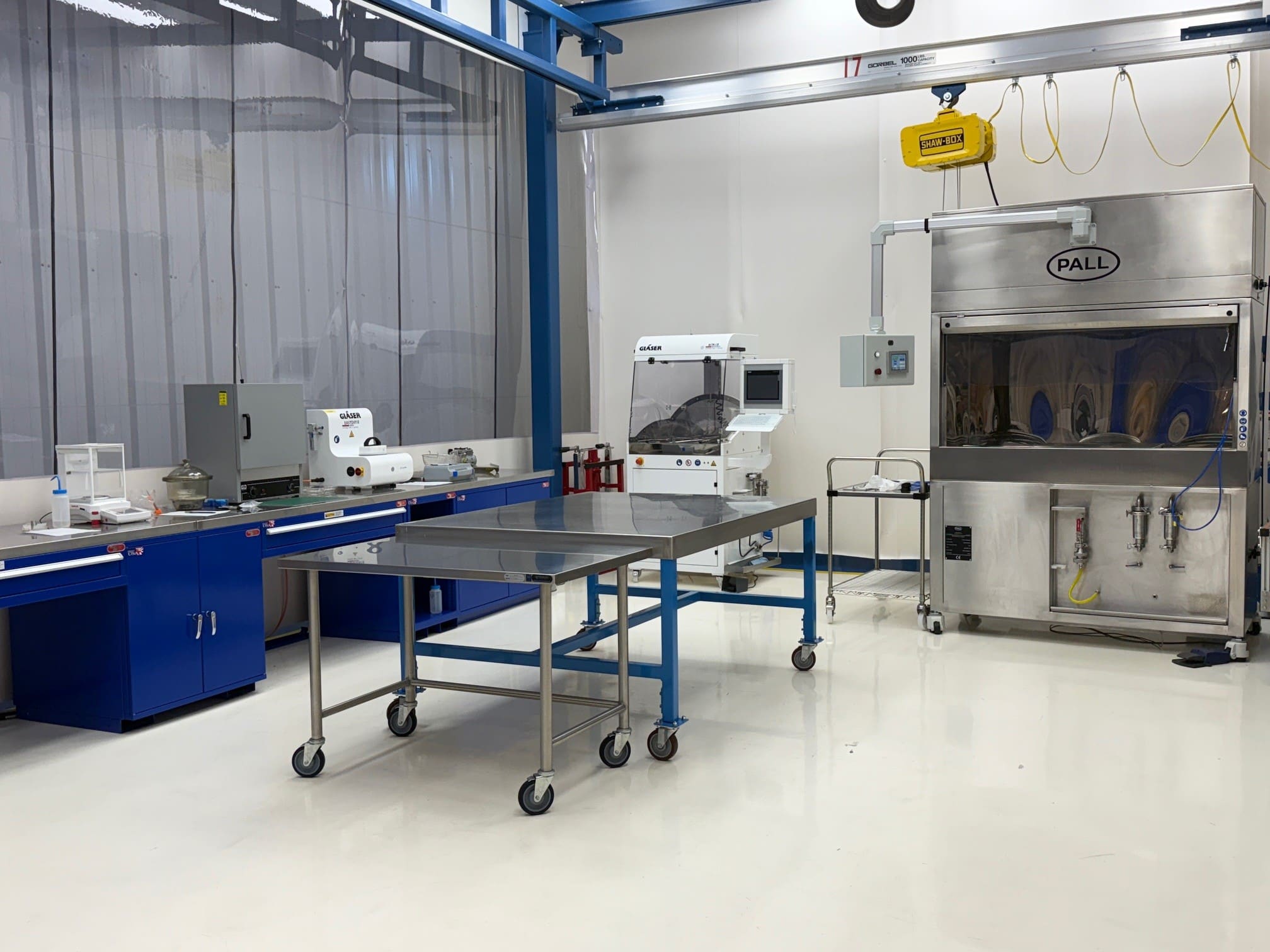
Industrial Inspection Company runs a technical cleanliness laboratory in Monroe, Michigan. It is ISO/IEC 17025:2017 accredited by PJLA (Perry Johnson Laboratory Accreditation) for ISO 16232 and VDA 19.1 particle counting and for SEM-EDS elemental analysis of automotive components. The ISO/IEC 17025:2017 scope of accreditation is published. Extraction is by pressure rinsing, ultrasonic bath, internal rinsing or agitation, and results come in an ISO 16232 / VDA 19 compliant report. Send the specification and its revision with the parts, or contact the laboratory first and we will confirm what the document calls for before you ship. Call +1 (734) 242-9935 or email sales@oemsupplier.com.