Coolant Cleanliness vs. Component Cleanliness in a Direct-to-Chip Loop
Two places to test
A direct-to-chip cooling loop can be tested for particles in two places: the coolant, and the parts the coolant runs through. They answer different questions.
What a coolant test measures
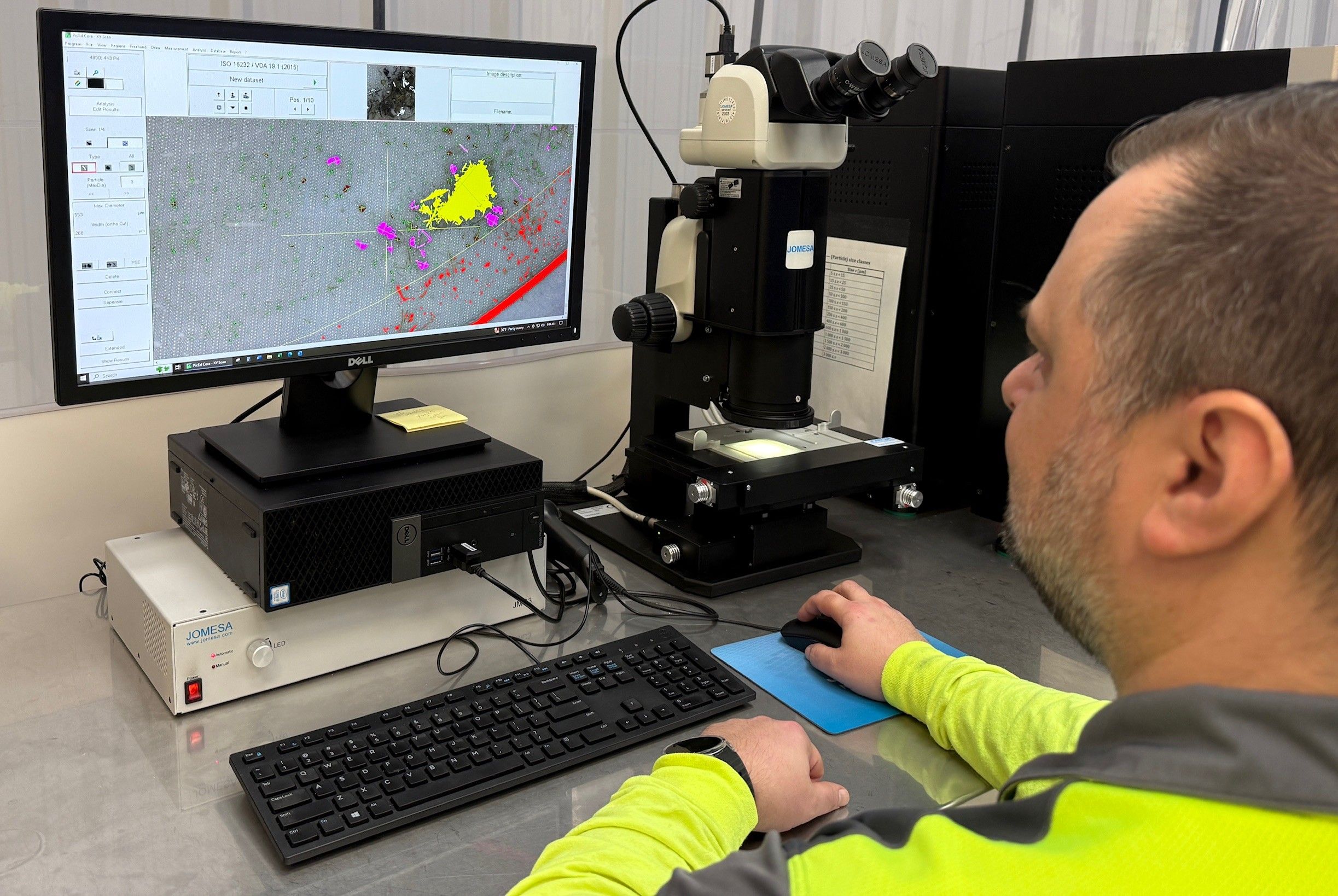
A coolant test measures the particles suspended in the fluid at the moment the sample was pulled. A 500 mL sample is passed through a membrane filter, and an automated microscope counts and sizes every particle on the filter. Results are reported per mL by size class, with metallic and non-metallic particles counted separately. The method is on the glycol coolant particle testing page.
What a component test measures
A component test measures the particles sitting on a part’s wetted surfaces before it goes into the loop. The particles are rinsed off with a test liquid under ISO 16232 and VDA 19.1, collected on a filter, and counted the same way. Results are reported per part or per surface area.
When to use each
- Coolant test: after a flush and fill, at commissioning, and at intervals while the loop runs.
- Component test: when qualifying a cold plate, manifold, hose, coupling or pump before it is installed, or when checking a supplier’s cleaning process.
- Both: when a coolant result is high and you need to know which part is shedding.
Finding the source
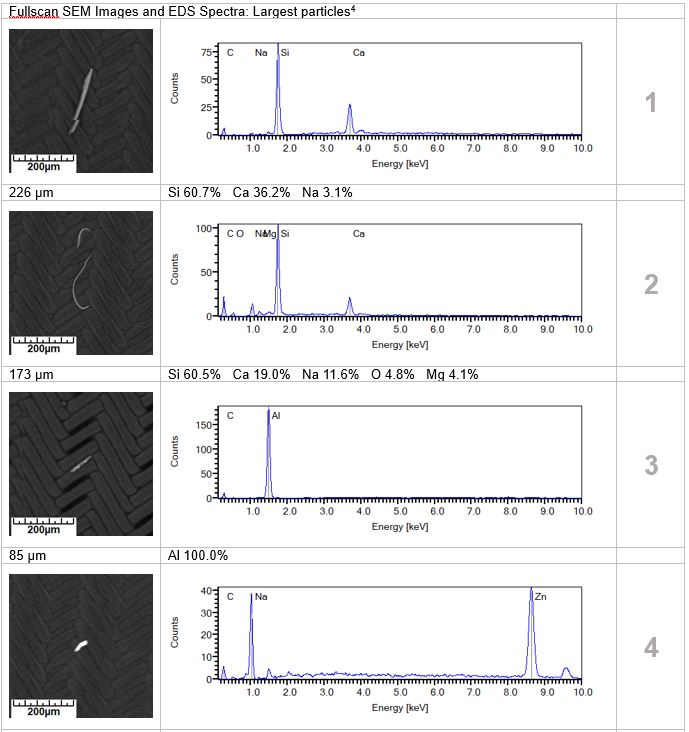
A count tells you how many particles there are and how large. It does not tell you what they are. SEM-EDS analysis reads the elements in each particle and assigns a material class. Aluminum, copper, braze alloy, steel, elastomer and mineral particles each point to a different part or process.
One lab for both
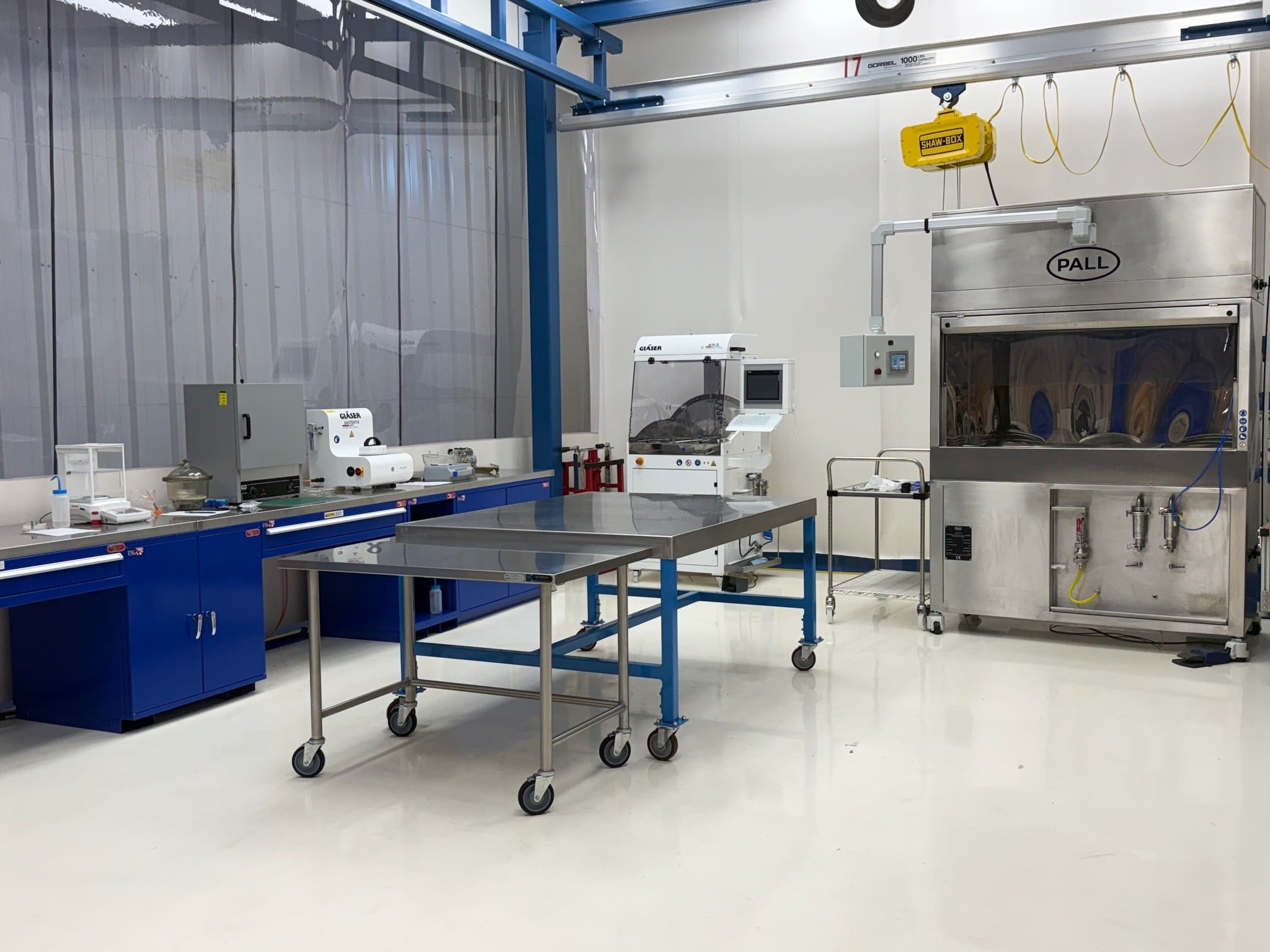
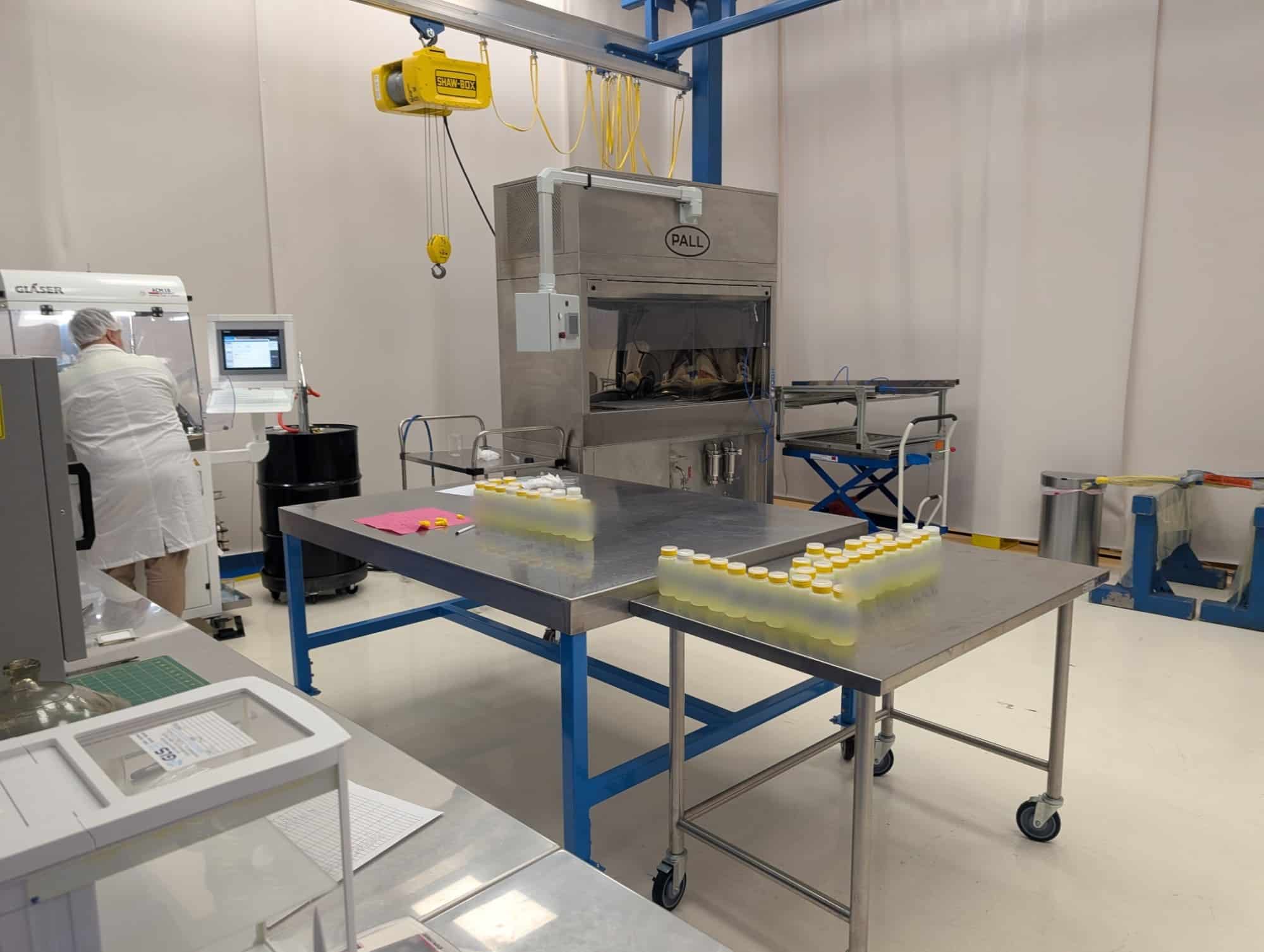
Both tests run in the same clean room in Monroe, Michigan, on the same Jomesa microscope and SEM-EDS system, so a fluid result and a component result can be read side by side. To send samples or parts, call +1 (734) 242-9935, email sales@oemsupplier.com, or use the contact form.