What Is Non-Destructive Testing (NDT)?
Non-destructive testing (NDT) is a method of inspecting materials, components, or structures for defects without causing damage or altering usability. It lets engineering teams confirm safety and performance while keeping the asset in service.
In plain terms, what non-destructive testing means is verifying integrity without cutting, breaking, or permanently deforming the part. If you have asked what is NDT non-destructive testing, it is inspection that preserves the material. This applies to non-destructive testing of materials across manufacturing, and it is widely used in non destructive testing in engineering and non-destructive testing in welding.
How Non-Destructive Testing Works
If you are wondering how does non-destructive testing works, the core idea is simple. Each method uses a physical principle to reveal surface or subsurface discontinuities.
- Surface defects: cracks, laps, porosity open to the surface, corrosion, undercut, weld surface issues
- Subsurface defects: internal cracking, lack of fusion, inclusions, wall loss, laminations
Common Principles Used in NDT Include:
- Visual examination for surface conditions
- Capillary action to pull penetrant into surface breaking flaws
- Magnetism to concentrate particles at discontinuities
- Sound waves to measure thickness or find internal features
NDT is performed by qualified inspectors. A non-destructive testing technician selects the method, prepares the surface, conducts the test, interprets indications, and documents results. That is what a non-destructive tester does. Many teams also refer to these roles as non-destructive testing jobs in inspection, quality, and maintenance programs.
Typical NDT Workflow of NDT
- Surface preparation
- Application of test method
- Interpretation of results
- Documentation and compliance reporting
This process supports preventative maintenance and failure prevention, which is the purpose of non-destructive testing. It is also why non-destructive testing is important in safety critical operations.
Examples of Different Types of Non-Destructive Testing
Engineers often ask what are non-destructive testing methods and what are the types of non-destructive testing. There are many methods used across industry, but most programs center on a set of common techniques. If you are wondering how many types of common non-destructive test are there, the practical answer depends on your industry and code requirements, but these are some of the most widely used NDT methods.
Industrial Inspection Company provides the following core services.
Visual Inspection (VT)
Visual inspection is the baseline NDT method and is often the first pass in an inspection plan. It identifies surface level defects and conditions such as cracking, corrosion, deformation, weld profile issues, and coating problems. For welding, VT is used to verify fit up, bead profile, undercut, and surface discontinuities before and after welding.
Use cases include welding and fabrication, structural integrity review, and routine equipment condition assessments. VT is cost effective, fast, and provides immediate feedback.
Liquid Penetrant Inspection (PT)
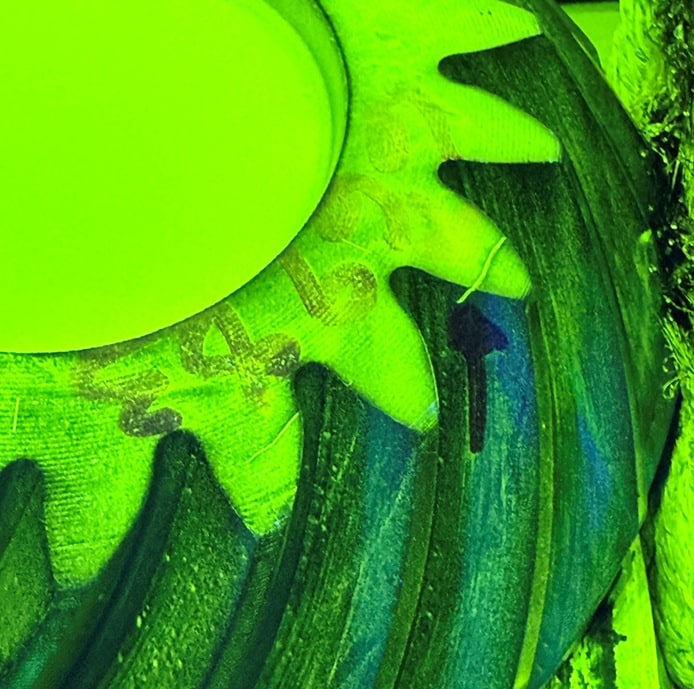
Liquid penetrant inspection, also called dye penetrant testing, uses capillary action to draw penetrant into surface breaking discontinuities. After dwell time and removal of excess penetrant, a developer pulls penetrant back out of flaws, making indications visible.
PT is suited for nonporous materials and is commonly used on machined parts, welds, castings, and components where tight surface crack detection matters. It is often used for aerospace related components, engine parts, and weld seams when surface breaking cracks are a concern.
This is a clear example of a non-destructive test in practice, because the part remains usable after inspection (assuming cleaning and process controls are followed).
Magnetic Particle Inspection (MPI)
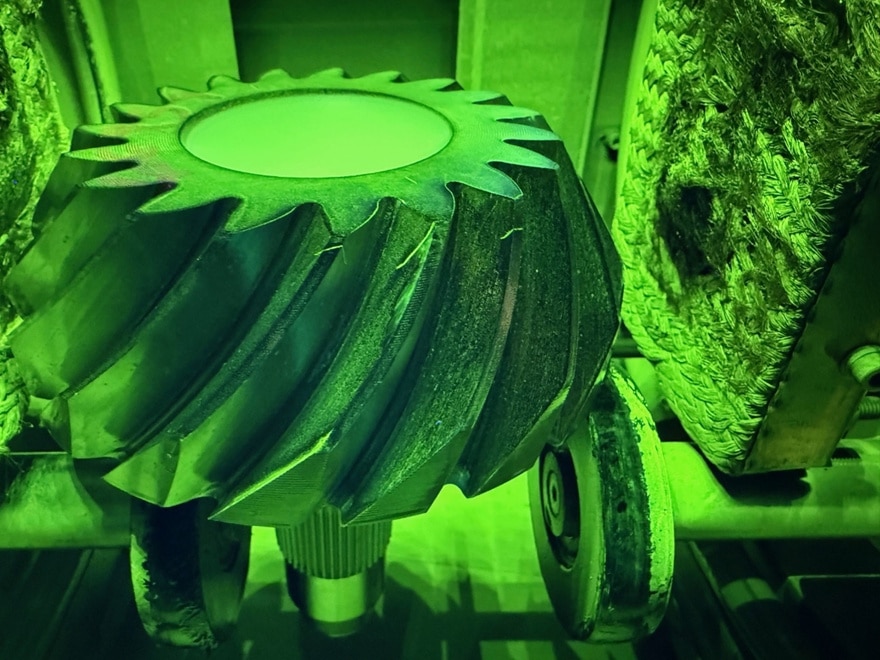
Magnetic particle inspection applies a magnetic field to a ferromagnetic material. Discontinuities interrupt the magnetic field, producing leakage fields that attract magnetic particles. This makes surface and near surface flaws visible.
MPI is limited to ferromagnetic materials, but within that scope it is a high value method for finding tight cracking, laps, seams, and weld related discontinuities near the surface. Typical applications include shafts, gears, welds, and many commercial engine components. If you are looking for which of the following is a non-destructive test in ferrous materials, MPI is a common answer.
Ultrasonic Thickness Testing (UTT)
Ultrasonic thickness testing uses sound wave propagation through a material. The instrument measures time of flight to calculate thickness, which is useful for corrosion monitoring and wall loss assessment. Ultrasonic methods can also support internal flaw identification depending on technique and setup.
UTT is widely used for pressure vessels, pipelines, structural steel, tanks, and engine housings where thickness matters for fitness for service decisions. It is a primary approach for non destructive testing of materials when internal access is limited.
For engineers working with advanced materials, including composites, this topic also ties into a review of non-destructive testing methods of composite materials, where ultrasonic approaches are often part of broader inspection planning.
What Are the Advantages of Non-Destructive Testing?
Engineers and quality teams ask what are the advantages of non-destructive testing because it impacts cost, reliability, and safety.
Key NDT advantages include:
- No material damage, so parts can remain in service
- Lower long term cost compared to scrapping parts for verification
- Increased safety through early defect detection
- Earlier detection of fatigue, cracking, corrosion, and weld discontinuities
- Regulatory and code support via documented inspection records
- Extended asset lifespan through condition based maintenance
What Is the Difference Between Destructive and Non-Destructive Testing?
If you are comparing what is destructive and non-destructive testing, the difference is whether the test damages the part.
Destructive testing intentionally damages or destroys a sample to measure strength limits, failure modes, or material properties. Non-destructive testing evaluates integrity while preserving usability.
| Feature | Non-Destructive Testing | Destructive Testing |
| Damages Material | No | Yes |
| Reusability | Yes | No |
| Cost Impact | Lower long term | Higher replacement cost |
| Safety Assurance | Preventative | Reactive |
This ties directly to why non-destructive testing is important in reliability programs.
Common Destructive Testing Examples
- Tensile testing
- Bend testing
- Impact testing
- Hardness testing
A common question is whether hardness testing is non-destructive. Many hardness methods leave an indentation, which permanently marks the surface and is generally treated as destructive or at least semi destructive, depending on the standard, acceptance criteria, and component requirements.
Common applications of NDT and destructive testing:
- Use destructive testing for material qualification, process validation, and coupon testing.
- Use NDT for in service inspection, weld verification, corrosion monitoring, and production quality control where the part must remain usable.
This directly answers what is the difference between destructive and non-destructive testing.
Why Non-Destructive Testing Is Critical for Combustion Industrial Engine Manufacturing
Commercial engine manufacturing programs operate with low tolerance for unknown defects. NDT supports:
- Zero failure tolerance environments where missed defects can drive major safety and cost risk
- Safety compliance tied to customer requirements, codes, and quality systems
- Fatigue detection for high cycle loading components and welded structures
- Lifecycle asset management through repeatable inspections and trending
- OEM quality assurance standards including traceability, documentation, and controlled inspection procedures
Industrial Inspection Company supports engineering grade NDT programs with method selection, qualified execution, and clear reporting that fits procurement, quality, and engineering workflows.